
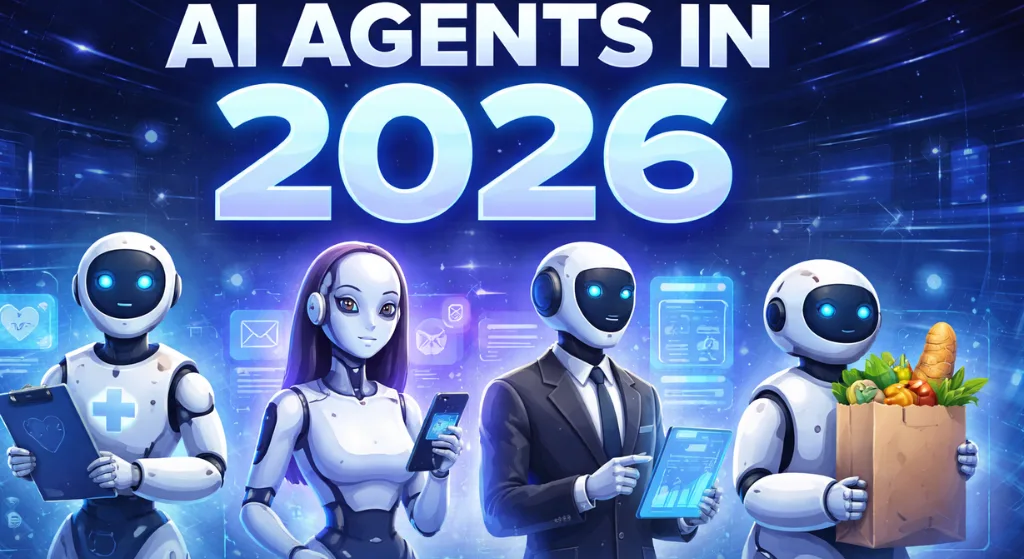
Introduction : AI Agents in 2026
AI agents are the primary drivers of digital transformation throughout 2026. Unlike traditional software programs that rely on manual input and require constant human management, AI-Powered Agents operate independently. They can examine the data provided, make decisions, perform complex tasks automatically, and continue to improve through machine learning algorithms.
Businesses of all sizes — from startups to multinational corporations—are quickly adopting AI for Business Automation to remain competitive. In addition to human-based operations, organizations use AI-Powered Agents to complete repetitive tasks (such as customer service or supporting high-level strategy and planning), allow for automation with customer service, and enable quick and efficient production of content and data analysis.
Based on research shared during numerous Trendmatrix sessions discussing technology in all parts of the world, AI-Powered Agents differ from AI Automation in that they have introduced a seismic shift in how digital work is conceived and performed. Previously, businesses would rely on existing approaches to work through human-driven organizational workflows, but now businesses are implementing intelligent, self-managing systems that increase the speed of delivery, scalability, and efficiency of completing work.
This article examines how AI-Powered Agents are revolutionizing existing workflow processes and where AI-powered automation technology will develop throughout 2026.
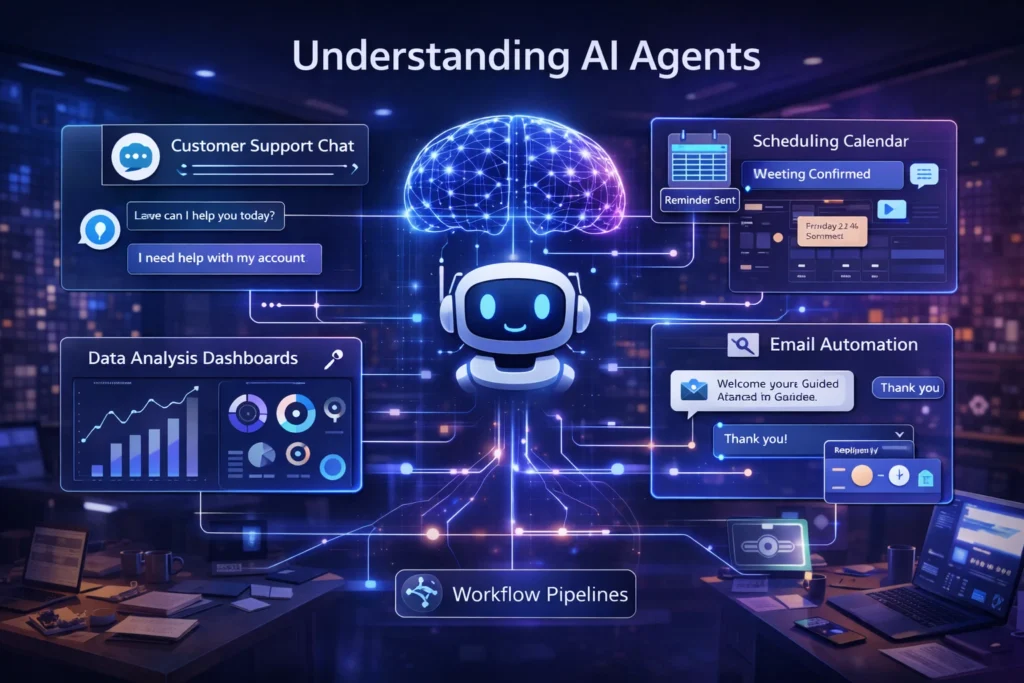
What Are AI Agents?
AI Agents are independent machines (AI systems) that perform work independently. Compared to multiple automation scripts, AI Autonomous can do the following:
- Analyse data.
- Make decisions.
- Perform multi-step processes.
- Adapt to changing inputs.
- Optimize results over time.
The difference between traditional automation tools and Autonomous AI Systems is that they are capable of operating on a dynamic basis rather than a predictable set of rules. This is done through the use of Machine Learning, Natural Language Processing, and Automation technologies with the help of AI agents.
For example:
AI Customer Support Agent – Learning from customer interactions and using an AI-based process to provide an appropriate response or escalate the call.
AI Marketing Agents – Automatically generating content and social media posts and keeping track of their audience and overall performance.
AI Business Agents – Using analytical tools to analyze sales data and recommend appropriate prices.
This level of intelligence will continue to make AI Agents a dominant force in AI for Business Automation through 2026.
Traditional Workflows vs AI Agents
Before AI Agents:
- Manual data entry.
- Human-led customer support.
- Slow content production.
- Fixed automation scripts.
- Limited scalability.
With AI Agents:
- Automated end-to-end workflows.
- Smart AI Automation decision-making.
- Real-time performance optimization.
- 24/7 execution without supervision.
- Scalable business systems.
Traditional workflows require human intervention at every stage. Ai Workforce eliminate these bottlenecks by functioning as digital workers.
This shift is why Free AI Tools that offer Ai Workforce capabilities are gaining massive popularity.
How AI Automation Tools Power AI for Business Automation
AI for Business Automation in 2026 is no longer about simple workflow triggers. It now includes autonomous execution.
Here’s how AI Agents improve business automation:
1. Automation of Customer Service
Autonomous AI Systems automate managing:
- Live chat.
- Email response.
- Ticket prioritization.
- Updates to Customer Relationship Management (CRM).
By automating how customer service is performed, you’ll not only save on operational costs but also increase the speed of response.
2. Automation of Marketing
AI Virtual Assistants automate managing:
- Content creation using AI.
- Optimization of campaigns.
- Monitoring performance.
- Targeting the audience.
Companies no longer have to hire large teams of marketers and can now use automated systems powered by AI agents.
3. Automation of Financial and Data Analyses
AI Virtual Assistants automate the processes that you will be able to analyze:
- Sales Reports.
- Cash Flow.
- Forecast Models.
- Risk.
It is now possible to use AI for Business Automation in a more strategic and predictive manner.
Free AI Tools That Offer AI Agent Capabilities
Many Free AI Systems provide entry-level features for Autonomous AI Systems as of 2026.
Companies will be able to:
- Automate workflows.
- Deploy ChatBot AI Virtual Assistants.
Automate content generation.
Automate Research Tasks.
The rise of Free AI Systems has removed the barriers to entry for using AI Systems. You no longer need an enterprise-level budget to implement AI Automation.
The democratization of AI Agents is one of the major trends highlighted by the Trendmatrix tech insights.
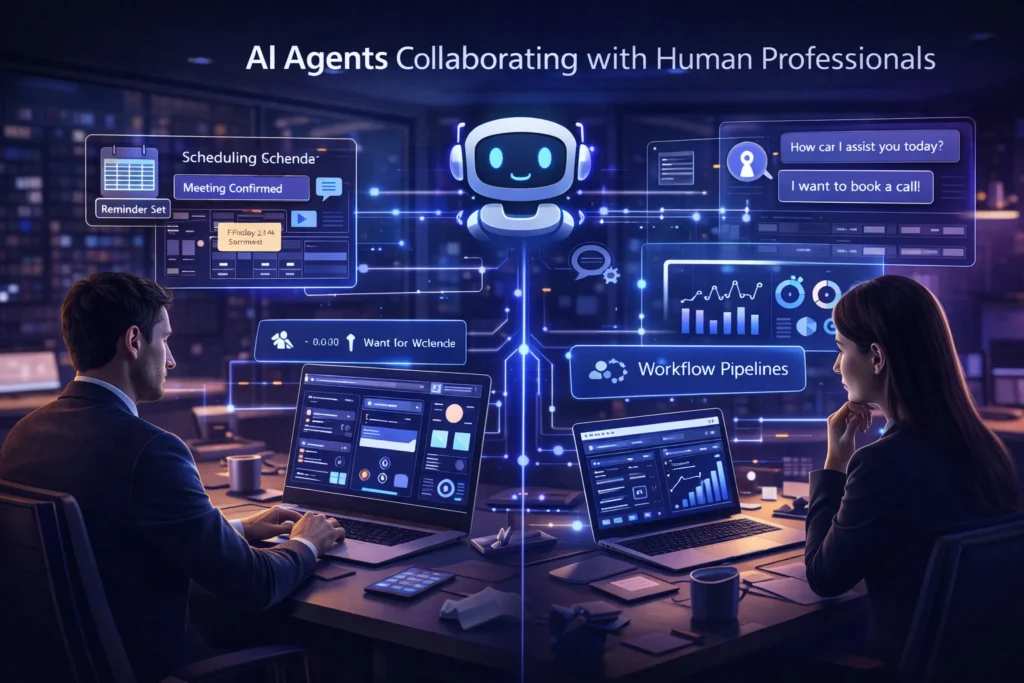
AI Agents and the Future of Work
AI-Powered Agents transform entire job structures as they replace repetitive duties.
- Humans now: Monitor
- AI-Powered Agents.
- Create automation processes.
- Enable optimization of artificial intelligence strategies.
Perform grocery and analysis
AI automation is moving work from execution to supervision and innovation.
AI-Powered Agents are now responsible for:
- Creating Content.
- Qualifying Leads.
- Conducting Market Research.
- Managing Workflows
This transformation of artificial intelligence business automation will be vital for increased competitiveness.
Benefits of AI Agents in 2026
1. 24/7 Productivity
AI-Powered Agents never sleep. They continuously execute tasks without downtime.
2. Reduced Costs
Businesses reduce staffing costs while maintaining efficiency.
3. Faster Scaling
AI Automation enables companies to scale operations without increasing workforce proportionally.
4. Data-Driven Decisions
AI-Powered Agents analyze large datasets instantly, improving decision-making speed.
5. Competitive Advantage
Companies using AI for Business Automation gain operational superiority.
Are AI Agents Replacing Human Jobs?
This is one of the most searched questions in 2026.
AI-Powered Agents are replacing repetitive, predictable tasks — not creativity or emotional intelligence.
Human skills still matter in:
Strategy
Leadership
Innovation
Relationship building
AI for Business Automation enhances productivity but does not eliminate human importance.
Conclusion
AI Agents are redefining the structure of digital work in 2026. What began as basic AI Automation has now evolved into fully autonomous AI systems capable of managing complex workflows without constant human supervision. From AI for Business Automation to intelligent execution systems powered by Free AI Tools, AI Agents are rapidly replacing traditional processes across industries.
Organizations that integrate AI Agents and other AI-driven automation systems early are gaining measurable advantages — improved efficiency, lower operational costs, faster scalability, and data-driven decision-making. Unlike traditional automation, these intelligent AI systems adapt, learn, and continuously optimize performance.
- The transformation is no longer theoretical.
- AI Agents are actively powering modern AI Automation strategies.
- AI Agents are becoming the foundation of AI for Business Automation.
- AI Agents are shaping the next generation of digital infrastructure.
The shift is clear: work is no longer just automated — it is autonomous.
AI Agents are not a future prediction. They are the present reality of smart, scalable, and intelligent business operations in 2026.
Frequently Asked Questions (Faqs)
Q1.What’s an AI Agent?
The definition of AI Agent is the same as any autonomous computer program, meaning it can identify, analyze, interpret, make decisions, and perform work autonomously, without ongoing supervision by people.
Q2.How do AI Automation make AI for Business Automation Better?
By automating many complex processes, AI Agents will enhance performance, and reduce the need for continual and manual input, creating a smarter AI solution for Business Operations Automation.
Q3.Will AI Automation Take Human Jobs?
While AI Agents can replace repetitive job functions, they will create new job functions for individuals in AI supervision, AI strategy, or AI system configuration.
Q4.Is AI Automation the Same Thing as an AI Agent?
AI Automation consists of processes that are automatically performed, whereas AI Agents use AI Automation technologies to also perform autonomous processes and make decisions.